
What to make with your first sheet of plywood
Four builds that make the next sheet easier — plus how to buy plywood without voids, get it home, and break it down before you leave the store.
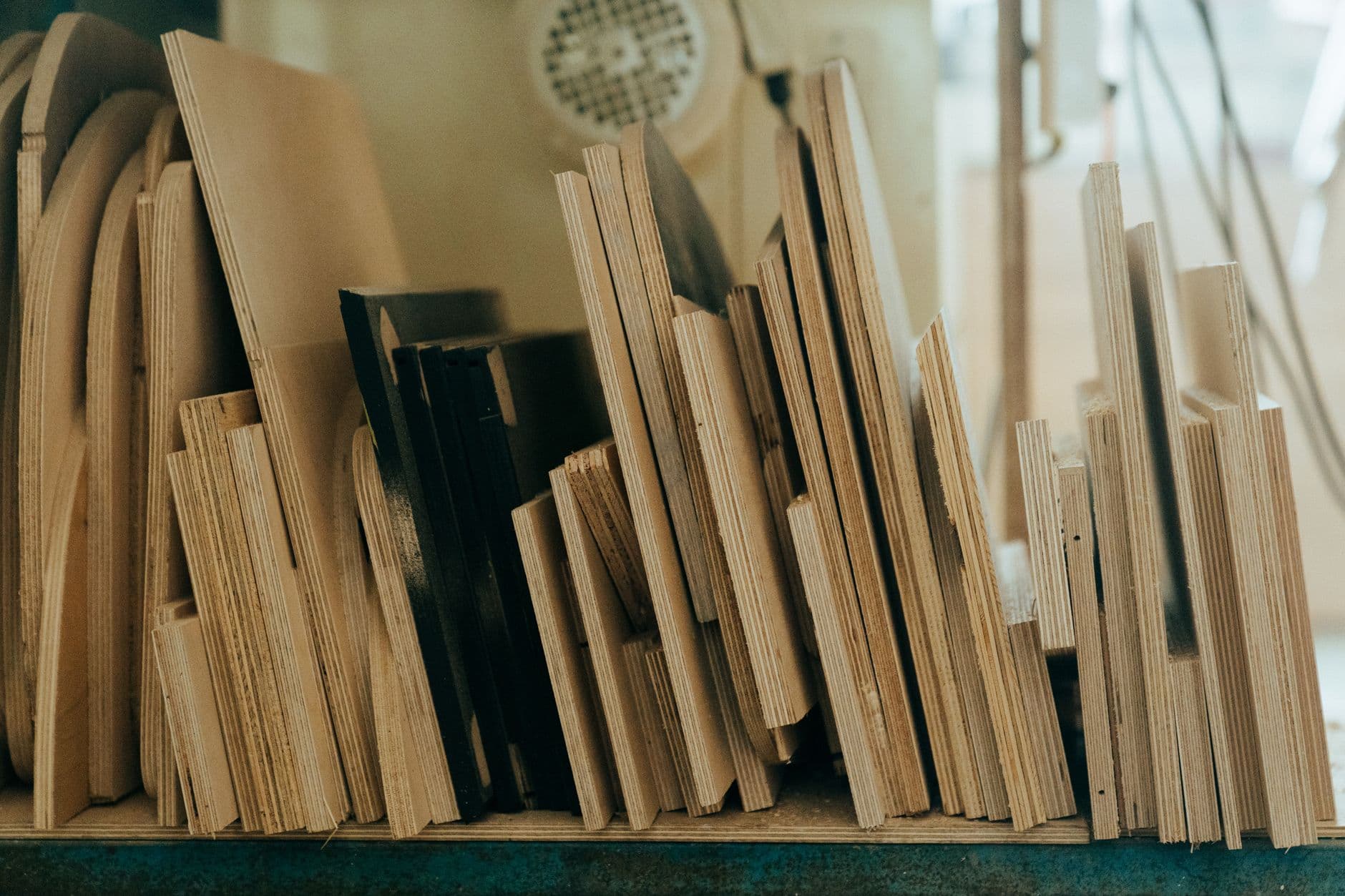
Your first sheet of plywood is 4 feet by 8 feet, weighs about as much as a golden retriever, and does not fit in your car.
Ask me how I know.
So you get it home somehow — roof rack, borrowed truck, the very patient friend — and it leans against the garage wall. And then it just… keeps leaning there. Because it stopped being a sheet of plywood the second you paid for it and turned into a decision. The first cut feels permanent.
Every "plywood projects" list out there hands you twenty-five finished photos and zero help with that feeling. Coffee tables. Headboards. A wine rack.
Cool. Where do I start?
Here's the part those lists skip: which sheet to buy, how to get it home in one piece, and four builds that each make the next sheet easier. That's the whole trick. Your first sheet shouldn't become one nice thing. It should become the setup for everything after it.
First things first, buy the right sheet
The stack at the big-box store labeled "sanded pine" is the cheap one, and it's cheap for a reason. The inner plies have voids — actual gaps in the middle layers. You'll cut a clean edge, look at it, and find a hollow tunnel running through your part, and there's not a damn thing you can do about it except fill it or hide it.
Sometimes that's fine! Shop shelves don't care. A visible edge does.
Baltic birch is the upgrade. Way more plies, basically no voids, and the edge is pretty enough to leave bare and call it a design choice. The downsides, because there always are some:
- It usually comes in 5x5 sheets, not 4x8. Plan your cut list around 60 inches, not 96.
- It's sold in real metric thicknesses — 18mm, 12mm, 6mm — not "three quarter inch."
- It costs more, and the price swings around a lot.
MDF is the other option people push at you. It machines beautifully and sands smooth as glass, but it sucks up paint like it's thirsty (plan for a primer coat plus 3–4 more), it turns to oatmeal if it gets wet, and the dust is nasty. Wear a real respirator, not a paper mask.
Now the thing nobody tells you until you've already screwed it up:
"3/4 inch" plywood is not 3/4 of an inch. It's about 23/32" — roughly 18.3mm. Design a joint around 0.750" and you're going to have a shitty afternoon wondering why nothing fits.
Measure the actual sheet. Every time. Different sheet, different day, measure again — and if you want the longer argument for why I keep everything in millimetres, I wrote that one up separately.
If you want to go deeper on grades and stamps, the APA – The Engineered Wood Association publishes the actual standards behind those letter grades on the corner stamp.
Get it home without wrecking it (or you)
A full sheet is a sail. Ten mile-an-hour crosswind on the freeway and it wants to leave.
If it's going on a roof rack: foam blocks underneath, straps front and back, and a strap through the car — over the roof, doors open, buckled inside — not just around the rack. If it's riding in a truck bed, put something heavy on the tail end. Red flag on the overhang.
And get help. Sheet goods are awkward more than they're heavy, and the injury isn't dropping it, it's the twist you do trying to save it from dropping.
Break it down before you leave the store
This is the tip that changes everything, and it's free.
Most lumber desks will cut a sheet down for you. Just ask. Even two rough cuts turns "unmovable object" into "fits in the back seat," and it means you're not fighting a full sheet across a wobbly job-site saw by yourself in a hot garage.
Their cuts are rough and their fence isn't a precision instrument. So leave yourself an extra 1/4" or more on any part that matters, and trim to final size at home with a straightedge and a circular saw. Rough cuts at the store, accurate cuts on your bench. That's the order.
Give them your list in pieces, not in projects. They're cutting, not designing.
Okay — what do you actually build
Four things, in the order I'd build them.
1. A french cleat wall
Rip a bunch of 6" strips, bevel one long edge at 45°, screw the cleats to your studs with the bevel pointing up and out. Done.
That's it. That's the project.
Now every tool holder you make for the rest of your life hangs anywhere on that wall and relocates in about two seconds. No more measuring and drilling every time you change your mind. It's the highest-return thing you can do with a sheet of plywood, it uses the long skinny parts of the sheet you'd otherwise write off as scrap, and it makes every project after it easier to store.
Start here. Genuinely.
2. A shop stool
Four panels, some glue, some screws. Maybe a hole in the seat so you can grab it one-handed.
You'll sit on it every single day. It teaches you square — and it'll teach you honestly, because a stool that isn't square rocks, and you'll feel it in your body every time you sit down. Best part: if it comes out ugly, nobody will ever see it. The stakes here are exactly zero, which is what makes it a good first build.
3. Shelves that don't sag
Boring. Also the thing you'll use the most, so let's do it right.
Plywood is strong across its face and weak over a long span. A 3/4" shelf loaded with paint cans and hardware will develop a permanent smile if you run it too far unsupported. Two fixes:
- Keep unsupported runs to around 32" or less.
- Or glue a 1"–1.5" strip of plywood along the front edge, on edge, like a little beam. A stiffener costs you almost nothing in material and roughly doubles what the shelf will carry without complaining.
Do both if the shelf is holding something heavy. Nobody has ever regretted an over-built garage shelf.
4. A box with real joinery
Once the wall, the stool, and the shelves are done, make something with finger joints.
This is where plywood stops being a flat brown rectangle and starts being a material. Fingers give you a huge glue surface, they self-align during assembly, and they look like you meant it.
They're also where the math gets annoying at 11pm, which is exactly why I built the Bad Ass Box Maker. Punch in your inside dimensions and your actual measured material thickness, and it spits out a flat pattern where every finger protrudes by exactly one material thickness. No test piece that comes out 2mm loose for reasons you can't identify at midnight.
What's left over is not trash
By the time you've built those four things you'll have a pile of offcuts — and offcuts are how you end up buying a sheet you didn't need.
Log them. That's the entire reason the Scrap Bin exists: know what you've already got before you drive back to the store for a sheet that three leftover pieces would've covered.
I know this is a lot. Plywood is one of those materials I could go on about for days.
The real answer
Your first sheet shouldn't become one nice thing.
It should become four rough things that make the next sheet easier — a wall that holds your tools, a stool to sit on, shelves that hold the mess, and one box you're actually a little proud of.
Every one of those is a project and infrastructure. That's the whole idea.
So what's leaning against your garage wall right now, and what's it waiting on?